Skip to content

Fueling a Yacht – How Much Fuel Does a Yacht Use and What to Remember?
Fueling a Yacht – How Much Fuel Does a Yacht Use and What to Remember Before Your Cruise?
Imagine this moment: you're standing on the captain's bridge, the sun slowly sinking below the Adriatic horizon, and you feel the soothing sea breeze. This is the essence of the freedom a yacht charter offers. However, every captain, even one on vacation, must face the mundane reality of sailing life – fuel logistics.

Colorful sunset over Adriatic sea coast in Dubrovnik | Croatia
In this article, we'll clear up any doubts about operating costs. You'll learn how much fuel a motor yacht uses, how to fuel a yacht step by step, and how to plan your budget so nothing interrupts your relaxation. With Travelboat, the booking and preparation process for a cruise is simpler than you might think, and knowing fuel consumption is key to a smooth cruise.
Fueling Your Yacht Step by Step – A Practical Guide
For many beginners, the first visit to a petrol station can be stressful. The tight quayside, the wind, and other sailors watching you can be intimidating. Don't worry – it's just a routine activity.
- Approach Preparation: Always check which side your fuel filler is on. Prepare fenders and mooring lines before entering the marina or the station's jetty.
- Communication: On popular routes, such as in Croatia or Masuria, it's a good idea to call the station staff on the VHF channel (usually 10 or 16, depending on the port).
- Mooring: Approach slowly, into the wind or current. Remember that the yacht has no brakes – you use reverse to slow the engine down.
- Safety First: Turn off the engine, close all hatches and windows (fuel vapors are heavier than air and can settle in the bilge), and ask passengers to go to the dock.
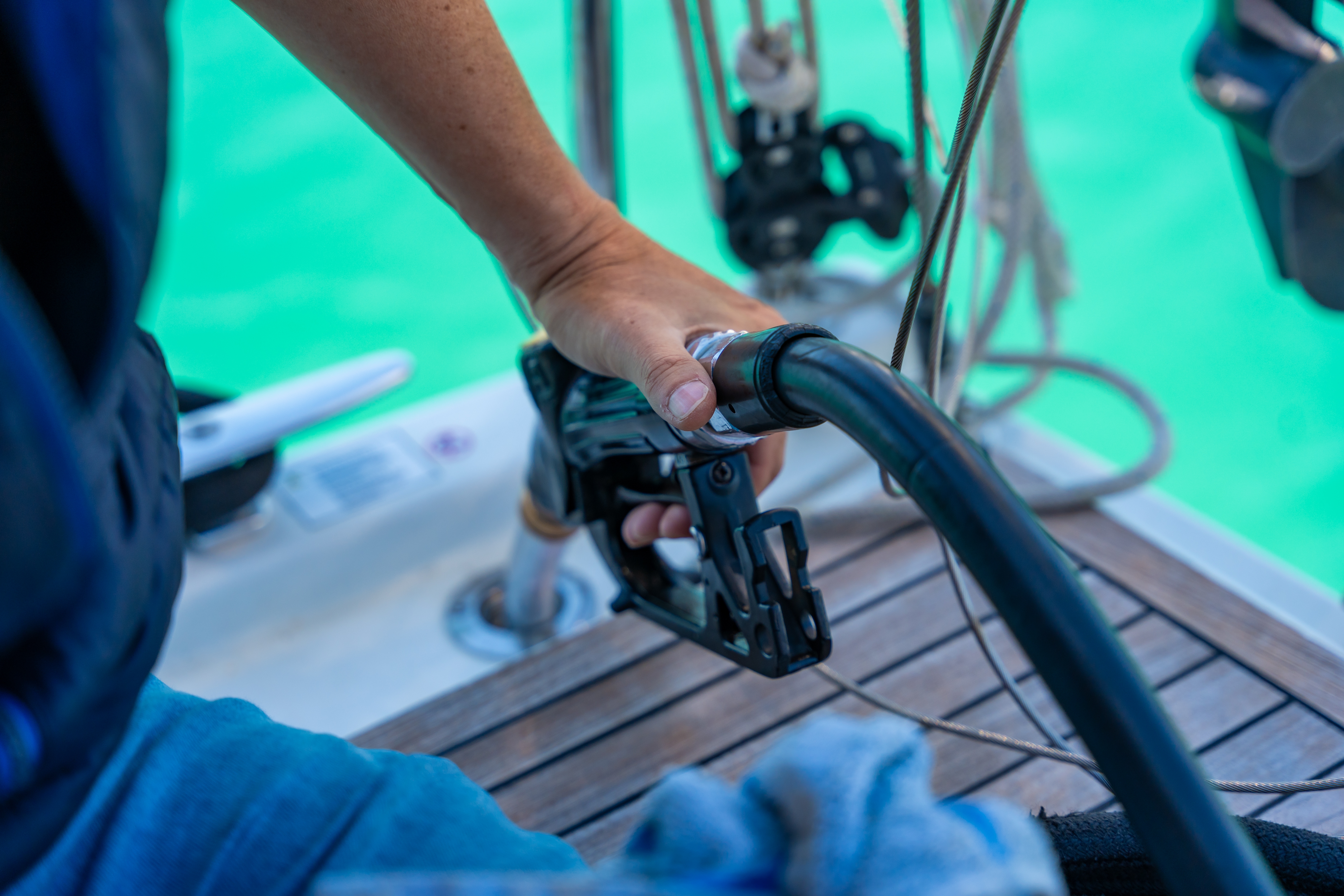
- Filling: Hold the nozzle firmly. Fillers on yachts can be fickle, and it's easy to "burst" and spill fuel into the water, which is severely punished.
What should you remember when refueling a yacht?
When filling the tank, not only precision matters, but also environmental protection. Every drop of oil or gasoline in the water is a huge damage to the ecosystem. Always have an absorbent cloth or a special sorbent pad handy to place on the filler neck.
Remember the 1/3 fuel rule: one-third for getting to your destination, one-third for the return, and one-third as a safety net for unforeseen weather conditions. When chartering a motor yacht, you usually receive the yacht with a full tank, and you must return it in the same condition (full-to-full rule).
5 things to remember at the gas pump:
- Make sure you're filling up with diesel or gasoline (mistakes happen more often than you think!).
- Check the marina's gas station opening hours – they may be closed on Sundays or in the evenings.
- Have cash or a card ready (in smaller ports, gas stations can be fickle).
- Never fill up with the engine or generator running.
- After filling up, ventilate the engine compartment before starting it again.
How much fuel does a motor yacht burn? Average fuel consumption on the water
This is a question everyone who plans their vacation budget asks themselves. The answer is: it depends. However, statistics give us a rough idea. A motor yacht's fuel consumption is significantly higher than a car's, because water creates enormous resistance.
A small motorboat with a 50-100 hp engine will consume around 5-10 liters per hour at a leisurely pace. However, if you plan, this figure can increase to 20-30 liters.
For medium-sized vessels 12-15 meters in length, luxury motor yachts can burn from 50 to even 200 liters per hour at cruising speed. For comparison, how much fuel does a fishing boat burn? Commercial vessels are optimized for economy and typically burn between 15 and 40 liters of diesel per hour. On the other hand, the fuel consumption of a sea ferry can be measured in tons per day – giants burn hundreds of liters per nautical mile.
Charter with us and don't worry about fuel
At Travelboat, we understand that vacation is a time for relaxation, not constant cost-counting. That's why we offer a wide selection of vessels – from economical sailing yachts, where fuel is a marginal cost, to modern catamarans and motor yachts with new-generation engines that reduce fuel consumption.
Our certified partners always provide information on the actual fuel consumption of a given vessel, so you can keep your budget under control. By choosing a Travelboat, you can be sure that the yacht is in excellent technical condition, which directly translates into lower fuel consumption of a motor yacht during your cruise. Plan your adventure today and enjoy the crystal clear waters without worrying about the fuel tank!
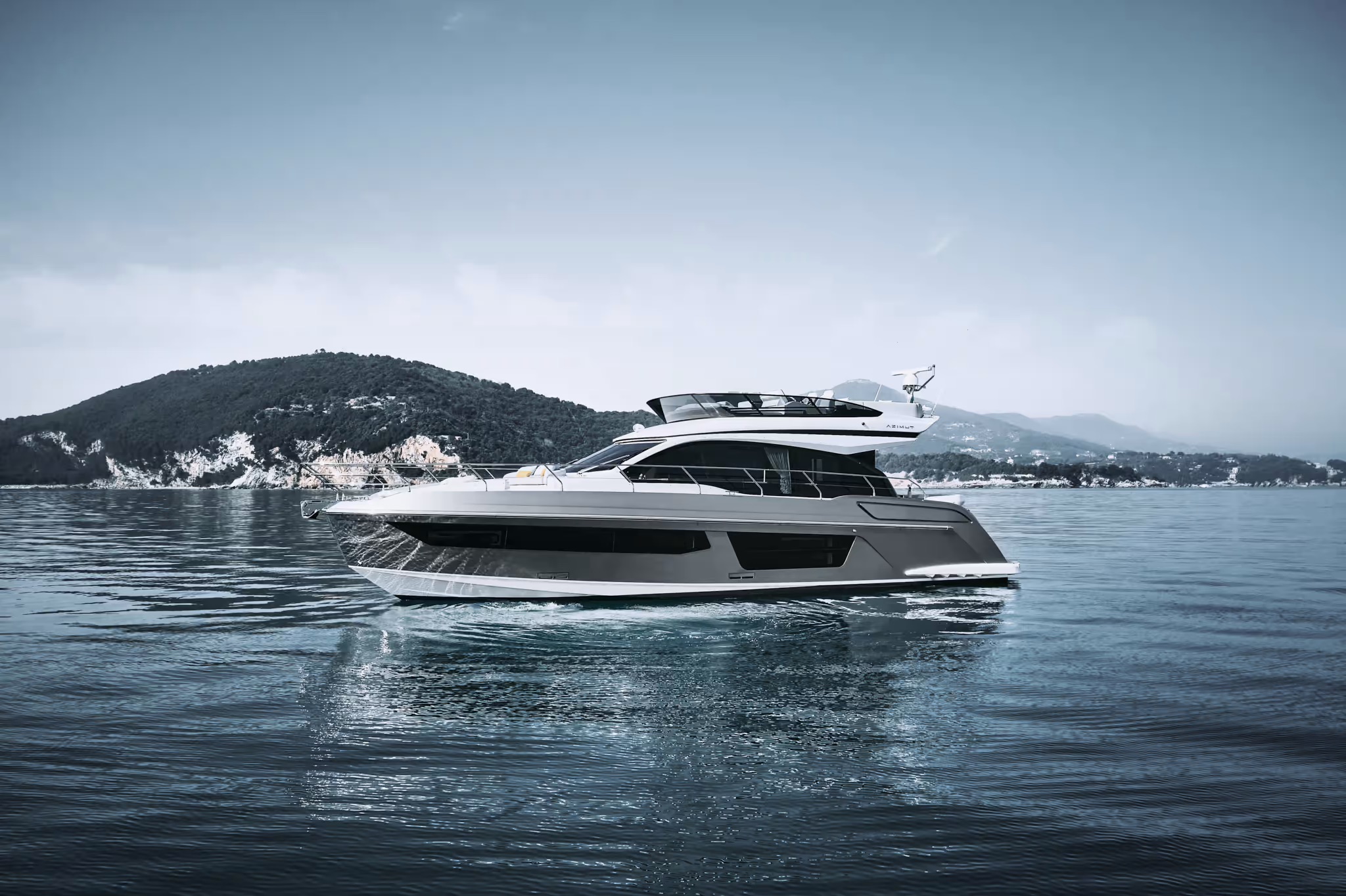
Motor Yacht Azimut Flybridge 53
What determines the fuel consumption of a motor yacht?
Understanding the factors that influence fuel consumption will allow you to save real money, which would be better spent on dinner at a cozy tavern.
- Speed and cruising mode: The biggest enemy of saving money. Switching from displacement mode to planing generates the highest fuel consumption.
- Hull condition: A yacht overgrown with algae or shells creates more drag, which increases fuel consumption by up to 15-20%.
- Vessel weight: An overloaded yacht, full water tanks, and excess luggage take their toll.
- Weather conditions: Sailing into strong winds and high waves forces the engine to work harder. ☁️
- Engine trim: Properly setting the engine strut angle (trim) allows the boat to sail lighter and faster at the same RPM.
How to reduce fuel consumption on a motor yacht? Practical tips
Want to know how much fuel your motorboat burns with smart management? You can reduce your costs by up to 1/4!
- Maintain cruising RPM: Every engine has a sweet spot – usually 20% below maximum RPM. 2. Plan your route with the wind and current: Take advantage of natural conditions, don't fight them.
- Maintain weight distribution: Don't let the entire crew sit at the stern. The yacht should sail evenly.
- Regularly check the propeller: Even a slight bend in the propeller blade dramatically reduces propulsion efficiency.
- Use the sails: If you're chartering a sailing yacht, use the engine only as an aid for port maneuvers and on calm days.
Fuel costs on the water – how to plan a cruise budget?
Croatia, Greece, and Masuria are the most popular destinations for Polish tourists. It's worth knowing that fuel prices in marinas can be 10-15% higher than at land-based stations. This is due to the costs of maintaining port infrastructure and supply logistics.
Assume a safe calculation: for a sailing yacht (12m), budget around €100-150 for a week of cruising in Croatia. For a motor yacht of the same size, costs can range from €500 to as much as €1500, depending on how much you plan to sail.
|
Vessel Type Average |
Fuel Consumption (l/h) |
Estimated Cost (week) |
|
Sailing Yacht (Engine) |
3-5 l |
400-800 PLN |
|
Small Motor Boat |
10-25 l |
1500-3500 PLN |
|
Large Motor Yacht |
50-150 l |
6000-15000+ PLN |
How much fuel does a motor boat burn compared to a larger yacht? A small boat (approx. 5-6m) typically burns 10-20 liters per hour while planing. A large motor yacht (over 12 meters) can consume between 60 and 200 liters of fuel per hour at cruising speed. The difference is due to the vessel's weight and water resistance.
How much fuel does a fishing boat burn? Fishing boats are designed for continuous operation. The average fuel consumption of a vessel 15-20 meters long is between 20 and 40 liters of diesel per hour.
How much fuel does a sea ferry burn? It depends on its size. Large passenger ferries burn between 2,000 and 5,000 liters of fuel per hour. Their efficiency is often calculated based on the number of passengers and vehicles carried, making them relatively efficient for transportation.
Can you refuel a yacht while the engine is idling? Absolutely not! This is extremely dangerous due to the risk of ignition of fuel vapors by a spark from the electrical system or exhaust system. The engine must be turned off at all times.
Which fuel is used in sea yachts – diesel or gasoline? Larger charter yachts and offshore vessels almost always use diesel engines (fuel oil) due to their durability and safety. Smaller motorboats and RIBs are often powered by gasoline outboards.
Does a yacht's fuel tank require periodic cleaning? Yes. Diesel tanks can develop so-called "fuel disease" (bacteria and fungi), which clogs the filters. Professional charter companies that Travelboat partners with ensure the tanks are cleaned regularly.
What should you do in the event of an emergency fuel shortage on the water? Drop anchor to avoid drifting onto shallow water or rocks, then call for help by radio (VHF channel 16) or call emergency services (e.g., SAR or local commercial assistance like SeaHelp).
Time for your adventure!
Now that you know everything about fueling a yacht and how much fuel a motor yacht burns, you're ready to take the helm. Don't let numbers limit you – proper planning is the key to success.