Skip to content

Types of Sailing – find the best option for you and set sail!
What is Sailing – Definition, History, and Basic Concepts
Wondering what sailing is today? The simplest definition describes sea sailing as the art of moving across the water using wind-powered vessels. It's a craft that has accompanied humanity for millennia – from the ancient Phoenician trading expeditions to modern vacation cruises. Today, this discipline combines unique sailing knowledge, a love of nature, and advanced vessel construction technology.
To safely begin your adventure, it's worth learning the basic principles of sailing and basic terminology. Every beginner should know the difference between port side and starboard side and the meaning of basic wind directions. Crew cooperation and the efficient tying of knots, such as cleats and life preservers, are also crucial.
Once you master these basics, sailing will become intuitive, safe, and incredibly satisfying. You don't have to memorize every command right away – on commercial cruises, an experienced skipper manages everything. Your sailing knowledge will grow naturally with each day spent on the water. Under the guidance of a professional, you'll quickly understand how to react to changing weather conditions and how to optimally adjust the sails to the wind.
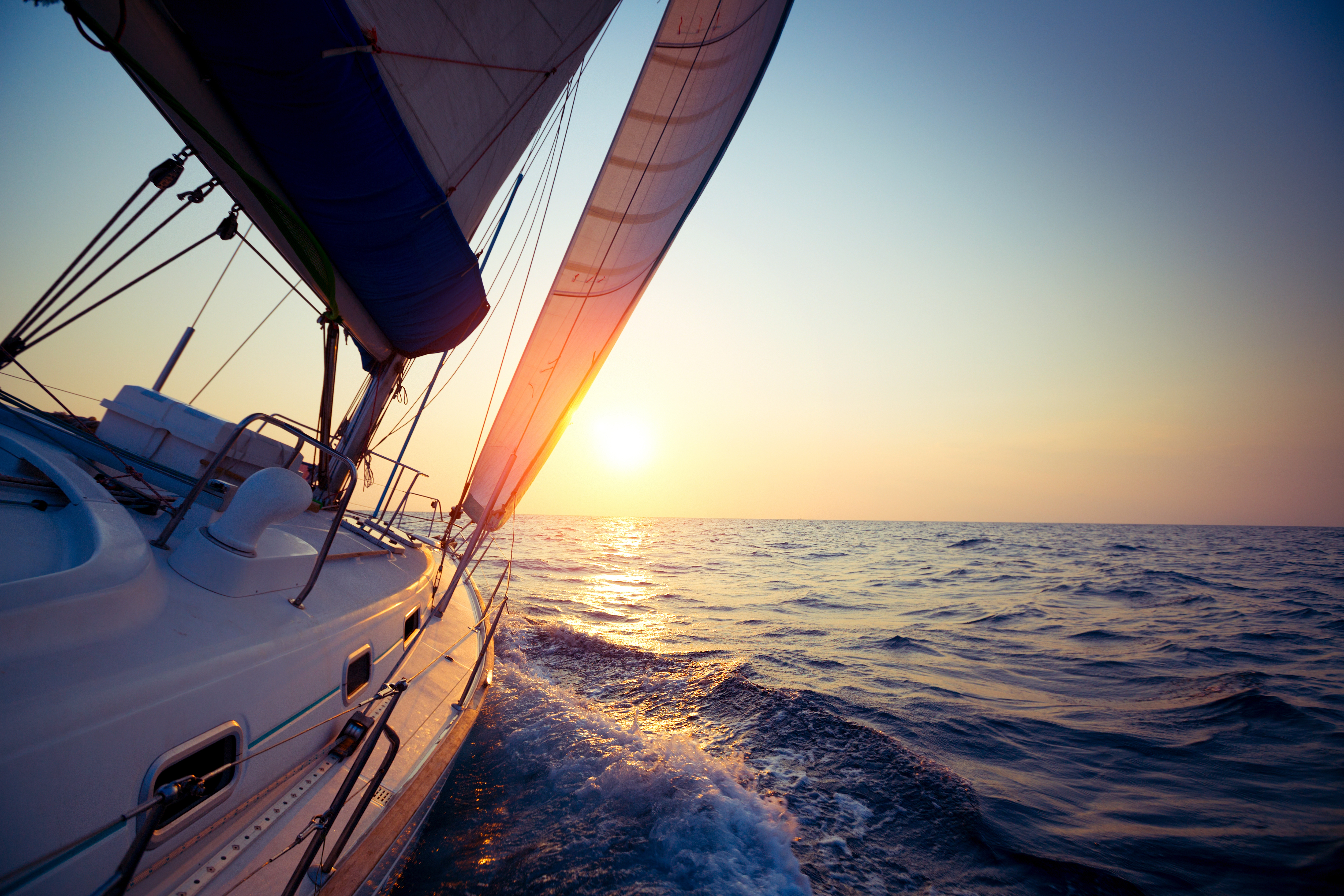
Sailing at sea – sunset. Source: iStockphoto
Yacht and Sea Sailing – open water sailing
If you're looking for something more than just your local lake, open water yacht sailing should be your goal. It's the essence of maritime adventure, allowing you to leave the safety of your port and face the elements. Sailing the Baltic, Mediterranean, or Adriatic Seas requires larger vessels, excellent navigational skills, and resistance to changing weather conditions.
For our fellow countrymen, a natural testing ground is often cruising in Croatia or Greece, where the sailing infrastructure is well-developed. A modern marina (i.e., a professional marina) offers full sanitary facilities, access to electricity, water, and a restaurant. This makes a sea voyage comfortable even for those vacationing aboard a yacht for the first time.
When choosing a sea sailing adventure, you need to decide on the right type of vessel to suit your needs. You can choose between a classic, monohull sailing yacht or a modern, spacious catamaran, which guarantees excellent stability in the waves. Catamarans are particularly beloved by Polish families because they don't heel as much as traditional monohulls.
Recreational and tourist sailing – relaxation and discovery
Not everyone who boards a yacht dreams of battling waves and punishing night watches. Beginner sailing often takes the form of pure recreation, where the priority is relaxation, sunbathing, and exploring unspoiled beaches. It's the perfect way to spend a vacation with friends or family, away from crowded hotels and noisy resorts.
On a tourist cruise, you tailor your daily schedule solely to your whims and the weather. In the morning, you're sipping coffee in a charming Greek bay, at noon you're diving off a deserted island, and in the evening you're moored in a bustling port. Such a vacation teaches flexibility, brings people closer together, and allows for a complete mental reset from everyday responsibilities.
To make planning your first sailing vacation easier, it's worth remembering a few basic packing rules. A well-prepared crew guarantees a successful vacation without unnecessary stress.
Check out our selection of sailing yachts in Greece—click the link
Sailing on a sailboat. Source: iStockphoto
5 things you must take on the pleasure deck:
- A soft travel bag – hard-sided suitcases on wheels are difficult to maneuver and are extremely difficult to stow in yacht lockers.
- Shoes with white, non-slip soles – they ensure your safety on a slippery deck and won't leave black marks on the laminate.
- A softshell jacket or oilskin – even in the sunny Mediterranean, the evening wind on the water can be very chilly.
- Sunscreen with a high UV protection factor and polarized sunglasses – the water acts like a giant mirror, causing you to tan several times faster.
- A car charger (12V) or power bank – 230V power on a yacht is often only available when you're docked at a city port.
Where to charter a yacht to pursue your passion?
The dream of your own cruise is just a step away – modern yacht charter has never been so simple and safe! On the Travelboat platform, you'll find thousands of trusted vessels in the world's best marinas, tailored to every budget. Don't have a license? No problem – you can charter a comfortable boat with a professional, local skipper who will take full responsibility for safe navigation. Visit Travelboat, choose your destination, book the perfect yacht in just a few clicks, and start counting down the days to your big seaside vacation!
Sport and regatta sailing – competing on the water
If you prefer adrenaline and constant challenges to relaxation, sport sailing may be your calling. It's a completely different dimension of sailing, where every second counts, perfect sail trim, and flawless tactical strategy. Regatta requires competitors not only to be in excellent physical condition but also to have a thorough knowledge of meteorology and aerodynamics.
In regatta sailing, perfect teamwork is crucial – everyone has a precisely assigned task (e.g., trimmer, bow sailor, or helmsman). A single error can immediately result in the loss of a valuable position or equipment failure. Competition takes place on both small single-handed boats (like the Olympic Laser class) and powerful, high-performance sea yachts.
Many Polish sailors, after years of recreational sailing, decide to participate in amateur regattas held in Masuria or the Baltic Sea. It's a brilliant way to improve your skills and test yourself in direct competition with other wind enthusiasts. This sport teaches humility towards the elements, quick decision-making, and complete trust in your crewmates.
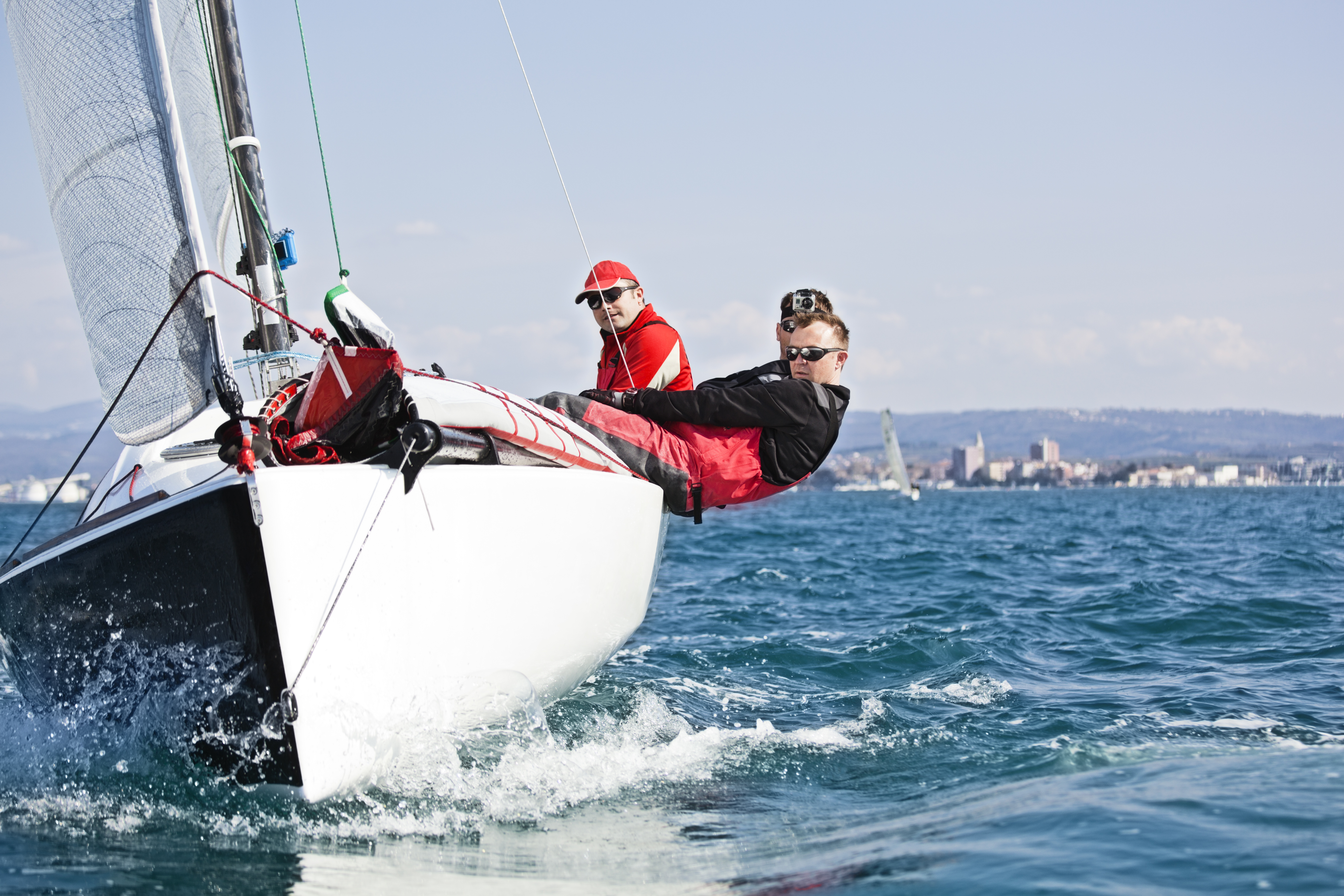
Sailing boat, sports race, regatta. Source: iStockphoto
Extreme and ocean sailing – for true adventurers
At the very top of the sailing hierarchy stands ocean sailing, synonymous with total solitude and a battle against the most powerful forces of nature. Sailing across the Atlantic, the Pacific, or around the ominous Cape Horn is a challenge to one's own weaknesses. There's no room for error here – the nearest help in case of an emergency could be thousands of nautical miles away.
Ocean expeditions often last from many weeks to even several months, during which the crew operates under a system of exhausting watchkeeping. Ocean-going yachts are true marvels of engineering, built from the lightest and most durable materials, such as carbon fiber and Kevlar. They must withstand the pounding of gigantic waves and hurricane-force winds in the forties.
A separate chapter is dedicated to solo, non-stop voyages around the world, considered the Mount Everest of human capabilities. These types of expeditions are not only a test of equipment, but above all, a monumental test of the human psyche. If you want to learn how to sail at the edge of human capabilities, the biographies of famous solo ocean voyagers are the best reads for you.
FAQ – frequently asked questions
How long does it take to learn to sail independently?
The basic Yacht Sailor course, which allows you to sail independently on inland waters, typically lasts 1 to 2 weeks of intensive training. During this time, you'll master port maneuvers, safety rules, and learn how to properly navigate a sailboat. However, to feel completely confident on the open sea, it's worth spending at least several dozen hours under the supervision of a senior captain.
What physical and mental predispositions are useful for ocean sailing?
It requires, above all, tremendous mental resilience, the ability to cope with prolonged stress, sleep deprivation, and complete isolation. Physically, overall endurance, a strong sense of balance, and high overall fitness are essential. The ability to quickly and analytically assess risk in crisis situations in the middle of the ocean is also crucial.
What is the difference between a yacht for racing and a recreational sailing?
A racing yacht is as streamlined as possible, boasts a minimalist interior devoid of unnecessary comforts, and is equipped with highly advanced, lightweight sails and an extensive control system. A recreational yacht, on the other hand, prioritizes maximum crew comfort – spacious cabins, a fully equipped galley, bathrooms with hot water, and a stable structure that forgives minor helmsman errors.
Does family sailing require special training in child safety?
Yes, the safety of children is an absolute priority on every family cruise. Before leaving port, children must be thoroughly instructed in the rules of navigating the deck and provided with perfectly fitted life jackets (collars), which they must always wear outside the safety of their cabin. It's also advisable to install a safety net on the yacht's railings to prevent children from accidentally falling overboard.
What certificates and licenses are internationally recognized in offshore sailing?
The most respected and widely accepted certification systems worldwide include the British RYA (Royal Yachting Association) and the international ISSAs (International Sailing Schools Association). In Europe, including popular Croatia, you can easily charter a yacht with a Polish Yacht Skipper license and the mandatory VHF Radio Operator's Certificate (SRC).
Ready for a great adventure? Hit the water with Travelboat!
The theory is behind you – now it's time to turn your knowledge into unforgettable vacation memories! Whether you're looking for leisurely leisure sailing with your family or want to test your skills in challenging sea conditions, the Travelboat platform is your best travel partner. We offer safe, intuitive rentals of proven yachts from around the world at very competitive prices. Don't delay, find your perfect boat, with or without a skipper, and book your dream cruise today!