Skip to content

Port maneuvers step by step – a guide for sailors.
Maneuvering a yacht in port – where to start?
25/06/2026
Author: Travelboat Team
Every successful yacht maneuver begins in the skipper's mind long before passing the port heads. The key to success is cool calculation and awareness of the specifics of the vessel being steered. Before making any move, you must precisely assess the hydrometeorological situation and assign clear tasks to your crew.
What makes port maneuvers difficult?
A sailor's main adversary in tight harbor basins is the wind, current, and... indecision. A strong crosswind can quickly push the bow back, especially on modern pleasure craft with high freeboard. In addition, there's the yaw effect (paddle wheel effect), which causes the stern of the yacht to drift to one side when the engine is running astern. Understanding these forces is half the battle.
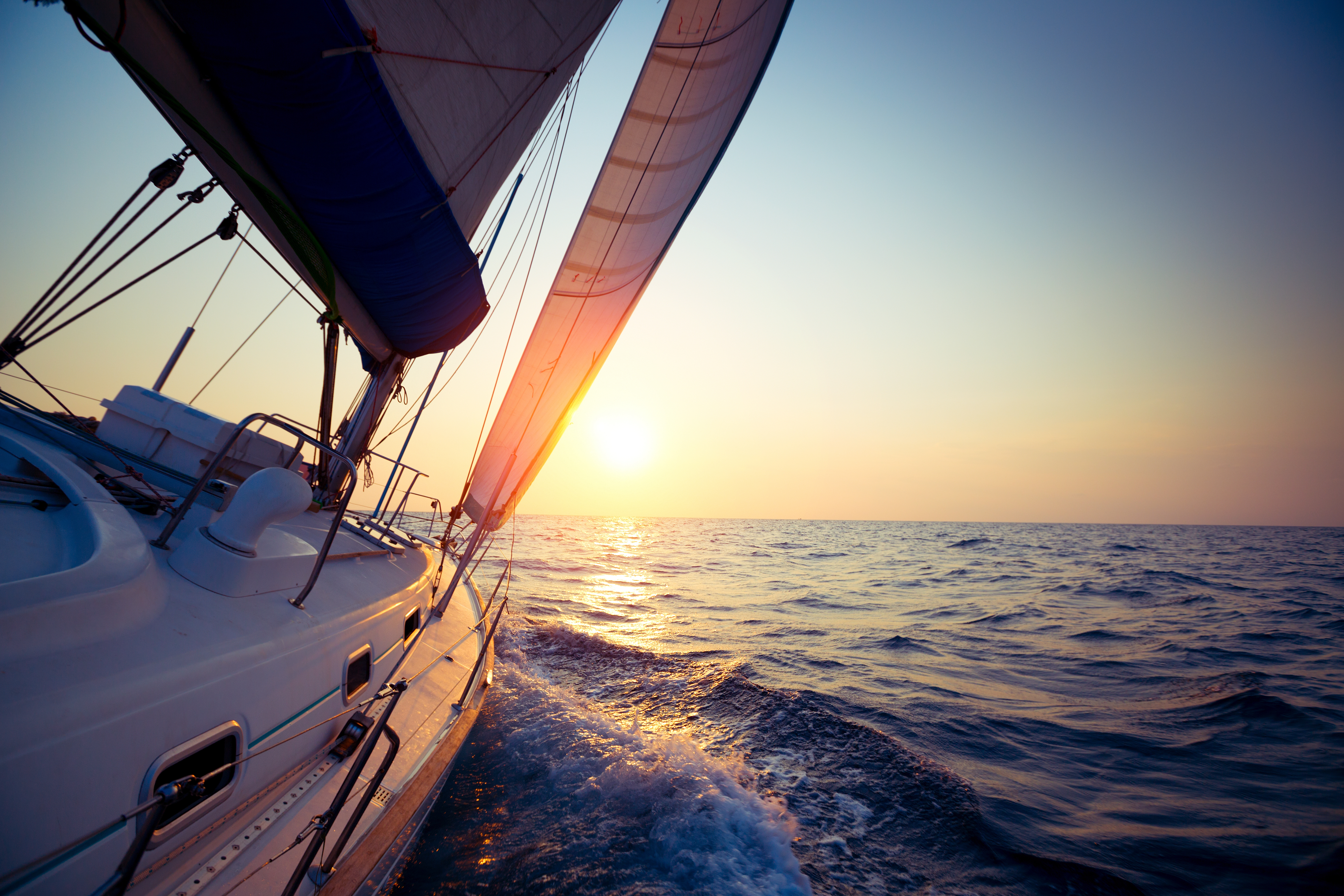
A sailboat maneuvering at sunset. Source: iStock license
How to prepare a yacht for entering and leaving port?
Proper vessel preparation is essential for safety. Before approaching the quay, follow these steps:
- Clearing the deck – remove unnecessary mooring lines, close hatches and windows.
- Preparing fenders – hang them on both sides at the appropriate height (matching the height of the quay or neighboring yachts).
- Preparing mooring lines – mooring lines and springs must be clarified, arranged in bundles and ready for immediate delivery to land.
- Crew briefing – discuss the action plan, designate people to throw out the mooring lines and operate the moving fenders.
Yacht charter and the first maneuvers in port – how to properly prepare for the cruise?
When you decide to charter a yacht , you often board a vessel you're not yet familiar with. Each model behaves slightly differently, with varying inertia and maneuverability. To avoid surprises, dedicate the first hour to a test sail immediately after leaving your home port. Test how quickly the yacht responds to rudder movements, how it behaves in reverse, and what its turning radius is. If you're planning a vacation aboard a classic vessel, choose a stable and comfortable sailing yacht charter that forgives minor mistakes and teaches classic craftsmanship. For lovers of space and dynamics, a modern motor yacht charter is the ideal option , often equipped with bow thrusters for precise positioning. Regardless of your choice, the Travelboat platform provides access to technically proven vessels.
Guide: step-by-step port maneuvers while mooring
Let's move on to practice: the most common scenario: approaching the quay backwards (long-side or muring). The following sequence will allow you to complete this task with complete control.
1.Reconnaissance and approach:
Maneuvering speed
Approach the harbor basin at minimum maneuverable speed. Assess available space, wind direction, and mooring pattern. Position the yacht at the appropriate angle in preparation for astern.
2.Reverse work and drift control:
Reverse gear
Engage reverse gear and allow the yacht to gain a slight inertia. Remember that port maneuvers under engine power require taking propeller drift into account – correct your course with a stronger rudder deflection before the yacht begins to turn on its own.
3. Approaching the quay and braking:
Working the machine forward
When the stern approaches the quay to within 1-2 meters, momentarily engage a short forward gear ("counter") to bring the vessel to a complete stop. Avoid hitting the jetty.
4. Mooring and stabilization:
Clarification cum
First, bring the stern lines to the quay and secure them to the cleats. Then, the forward crew should safely haul in and clear the mooring or drop anchor, keeping the yacht a safe distance from the concrete.
Click on the link and check out the offer for catamaran charter in Greece
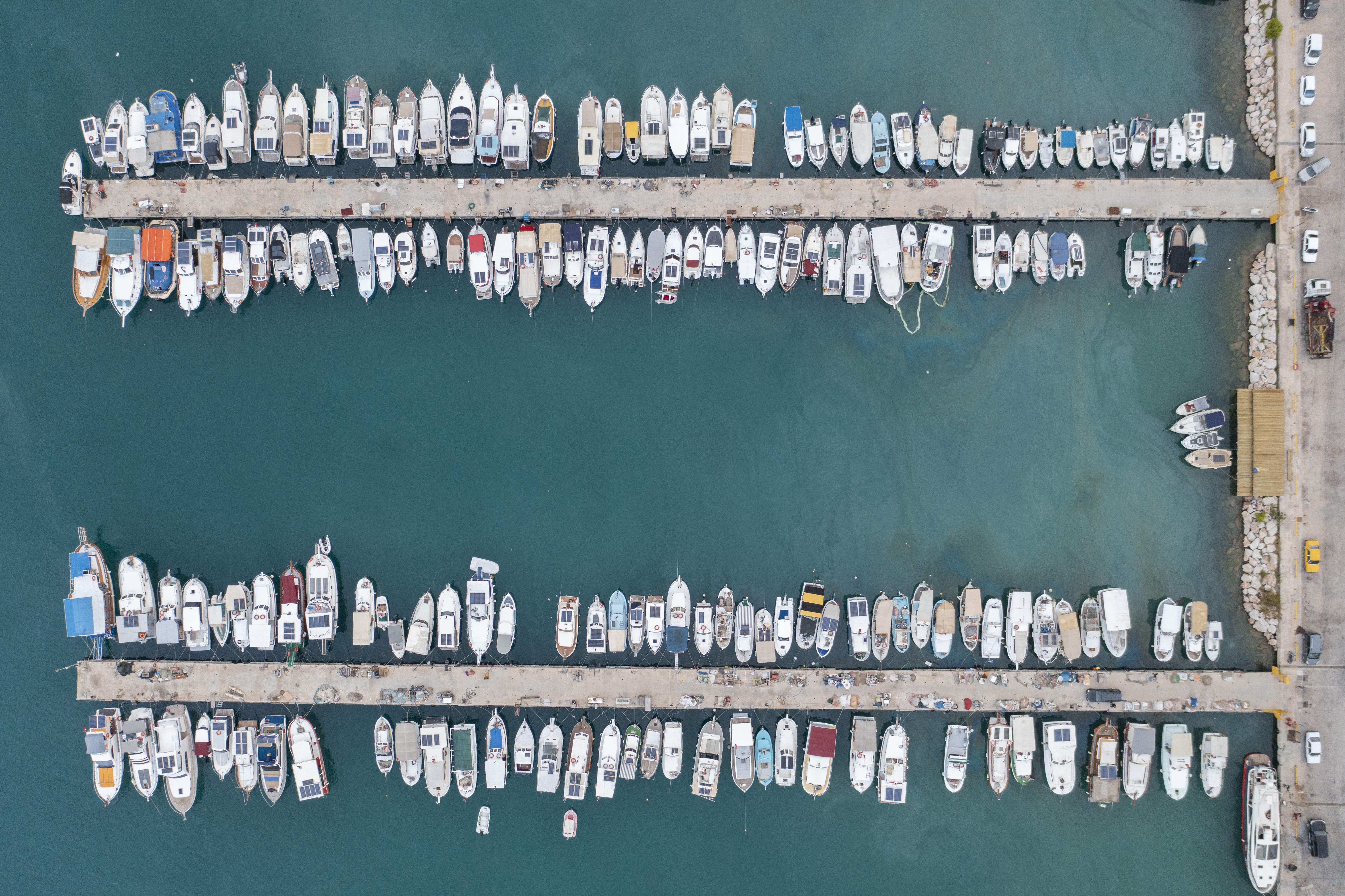
Aerial view of the Topcam marina with yachts in Antalya, Türkiye. Source: iStock license
Safety and precision on the engine
Modern yacht maneuvering in port relies primarily on power. Sails are lowered before reaching the outer harbor to minimize risk and focus on precise maneuvering.
How to safely maneuver a yacht at the quay?
The key to a safe long-side approach is to approach the quay at a steep angle (around 30-45 degrees), aiming the bow into the wind. In the final phase, just before contact with the pier, the rudder is moved away from the quay and a gentle forward thrust is applied, which causes the stern to tip over and perfectly parallel parking. Harbor maneuvers require a sense of intuition – it's better to go slower than too fast.
Click and check out the Eco catamaran charter offer
Port maneuvers on the engine – what should you remember?
Always remember the three golden rules of motorboating:
- Listen to your engine revs – maneuver with minimal throttle. High revs generate enormous forces that are difficult to control if you make a mistake.
- Give yourself time to react – the yacht only responds to rudder movement when water flows around the rudder blade. Rapidly swinging the wheel will have no effect.
- A counter-attack saves the situation – a short, powerful shot of the engine in the opposite direction to the movement can instantly stop the mass of the yacht.
Anatomy of mistakes: what to avoid at the marina
Even experienced skippers can sometimes be distracted. By analyzing the most common mistakes made during yacht maneuvers in port, you can effectively prevent stressful situations on the water.
- Excessive speed: the most common sin. Approaching too quickly drastically reduces the time available for course corrections and magnifies the force of a potential collision.
- Pushing your arms and legs between the yacht and the quay: never allow the crew to cushion the impact with their own bodies! That's what fenders are for. Bones break more easily than laminate.
- Lack of communication: shouting, panic, and conflicting commands from the skipper paralyze the crew. Announcements should be made in a calm, firm voice.
- Ignoring the wind: attempting to moor with the wind astern without sufficient speed will result in the yacht turning across the channel.
Comparison: motor yacht vs. sailing vessel
When choosing a holiday on the water, it is worth knowing that port maneuvers on a motor yacht and a sailing vessel – the most important differences result mainly from the design of the underwater part of the hull and the type of propulsion.
|
Maneuvering feature |
sailing unit |
Motor yacht |
|
Sideslip (drift) |
Large (high mast and sails, high side) |
Medium or large (depending on superstructure, no keel) |
|
The screw drift phenomenon |
Very clear with a single screw |
Smaller (often two screws or Z-gears) |
|
Inertia (braking) |
Large mass, long stopping time |
Less weight, very effective reverse gear |
|
Additional systems |
Bow thruster (optional) |
Bow thrusters (bow + stern), joysticks |
Port maneuvers on a motor yacht are usually more intuitive for car drivers thanks to the immediate throttle response, whereas a sailing yacht requires planning well in advance due to its enormous mass and deep keel.
FAQ: everything you need to know about winds in sailing
What weather conditions make port maneuvers most difficult?
By far the most challenging situations are strong, gusty sidewinds (pushing or pushing against the quay) and strong river or tidal currents in offshore marinas. These require significant drift allowances.
Does every sailing maneuver require the use of an engine?
In modern tourist marinas, for safety and space reasons, yes, an engine is mandatory. Mooring under sail is a fine art, but today it's practiced primarily for training purposes in open waters or in old, traditional ports.
What to do when there is no room to turn during a yacht maneuver?
Don't panic. Take advantage of the propeller drift by performing a tack (a tight turn with the engine running forward and backward and the rudder shifting accordingly). As a last resort, use a stern or bow spring to turn the yacht on the line around the bollard.
Does the width of the berth affect the mooring method?
Yes. In very narrow bays, it's crucial to perfectly straighten the yacht before entering between Y-booms or adjacent vessels. The fenders must then be precisely positioned to avoid getting caught between the sides.
How to communicate with the crew during port maneuvers?
Before entering port, establish clear signals and commands. Avoid shouting – use hand gestures (e.g., showing the distance to the quay with your hands). The crew must report obstacles clearly: "one and a half meters to the quay," "clear to port."
When is it better to ask the marina staff for help when maneuvering a yacht in port?
Whenever conditions are too much for you, visibility is minimal, or the current is too strong, call the marina on VHF (usually channel 9 or 12) before entering. The marina staff (marineros) will be happy to assist you from the pontoon or retrieve your mooring lines at the jetty. There's no shame in that—it's professionalism.
How to gain confidence when performing port maneuvers on a yacht?
Practice makes perfect. Take advantage of quiet mornings in empty marinas for practice. Practice approaching broadside and astern several times under the supervision of an experienced skipper. A well-prepared helmsman with theoretical knowledge and confidence in his skills guarantees a safe voyage.
Are port maneuvers on a motor yacht easier than maneuvers on a sailing vessel?
They are more intuitive because motor yachts respond more quickly to propulsion and often have twin engines or advanced bow thrusters. However, due to the lack of a deep keel, they are more susceptible to sudden gusts of wind.
Summary: Your key to a safe holiday
Perfect mooring isn't a matter of innate talent, but of thorough preparation, calm, and an understanding of the physics of water. Remember, every successful cruise begins with choosing the right vessel that meets your expectations and gives you a complete sense of control.
Don't let the stress of the marina rob you of the joy of sailing. Visit Travelboat , compare hundreds of verified offers, and book your dream yacht today. With good equipment and our guide in your pocket, any port will welcome you like a pro!