Skip to content

Catamaran - what is it and what does it look like?
What is a catamaran and how does it differ from a traditional boat?
25/06/2026
Author: Travelboat Team
In this article, we'll explain in detail what a catamaran is , its unique design, the most common types, and the cost of such a pleasure. Discover why this unique type of vessel wins the hearts of both experienced skippers and first-timers.
Starting with the absolute basics, it's worth precisely defining the concept of this structure. What is a catamaran ? In its simplest terms, it's a vessel with two parallel hulls of identical shape and dimensions, connected by a rigid main deck (platform). The word " catamaran " comes from the Tamil language ( kattumaram ), which literally means "tied logs"—a reference to the original boats used for millennia by the inhabitants of Polynesia.
The main difference between a catamaran and a traditional monohull lies in the way it provides stability on the water. A classic monohull relies on ballast stability – it has a heavy keel under the bottom, which provides static stability and counteracts wind pressure, but this results in a constant heel.
A catamaran, on the other hand, owes its stability solely to the geometry of its widely spaced hulls (shape stability). This means the double-hulled vessel practically doesn't heel under the influence of wind or waves, dramatically improving the crew's comfort and safety.
Click on the link and check out offers for catamarans in Croatia
What does a catamaran look like? Its structure and key design features.
For anyone observing the marina from the shore, this structure immediately stands out from the crowd. What does a catamaran look like ? It's a monumental, wide platform that visually resembles a floating house or a modern leisure platform. The width of a modern cruising catamaran is often almost half its length, providing a gigantic usable area.
The main structural elements of a catamaran yacht are:
- Two hulls (floats): narrow, streamlined side sections. In the touring versions, these contain private, isolated sleeping cabins and bathrooms.
- Central Platform (Main Deck): Connects both hulls. It features a spacious living area with a kitchenette (galley) that offers a 360-degree panoramic view of the sea.
- Aft and Forward Cockpits: The aft section houses a gigantic al fresco dining area. At the bow, between the hulls, there's a distinctive net (trampoline) for sunbathing and relaxation, although in recent models, this is increasingly being replaced by a rigid lounge deck.
- Flybridge (upper deck): present on larger pleasure craft, it houses the steering station and additional sofas for crew and guests.
Thanks to this architecture, the living space is divided into a day zone (saloon and cockpits on one level) and a night zone (cabins in separate hulls), which guarantees privacy unheard of on classic yachts.
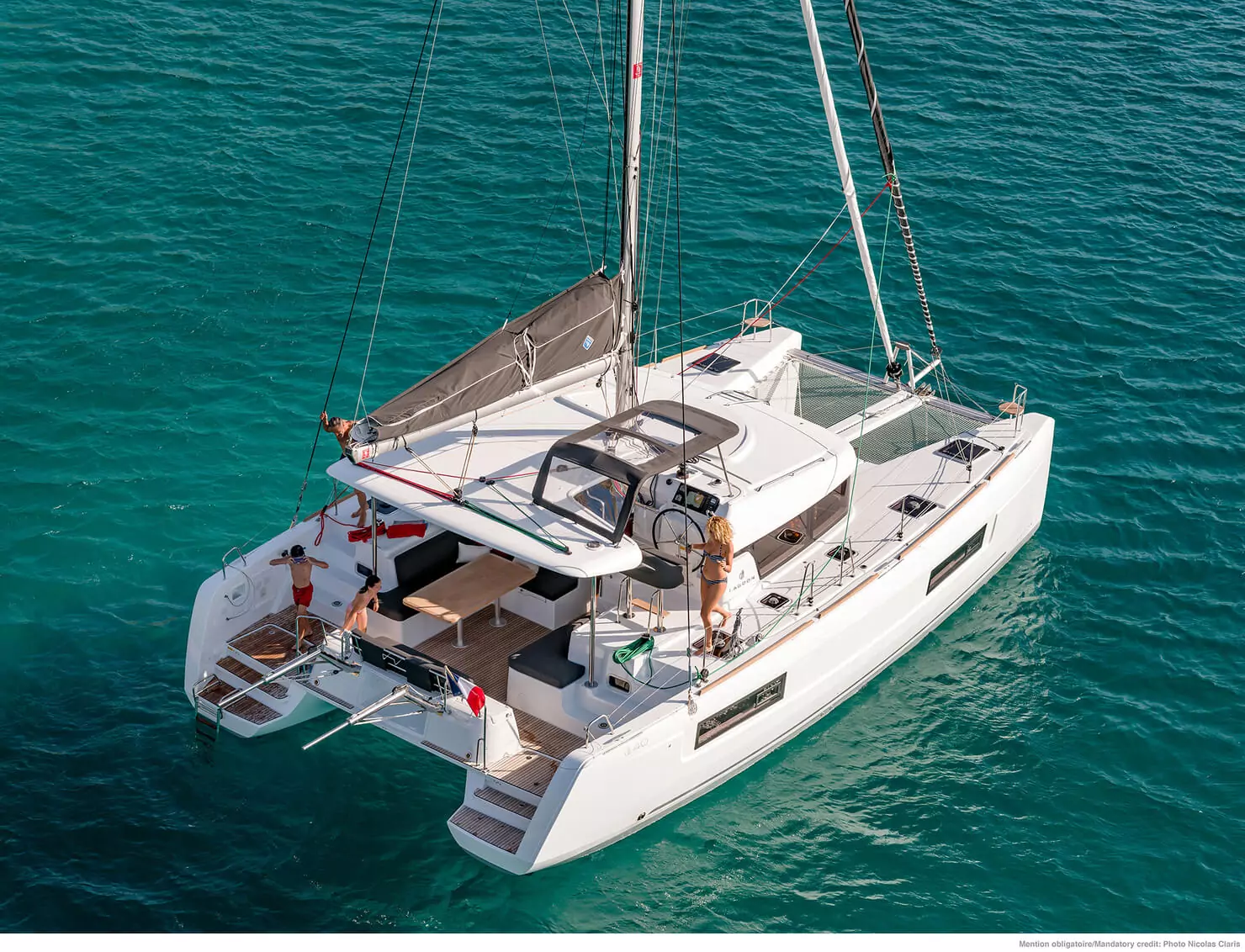
Lagoon 38 catamaran. Source: superyachts.pl
Sea, cruise or sports catamaran – what types of catamarans are there?
The double-hull segment has developed so dynamically that today we can encounter extremely different designs on the water, optimized for specific purposes.
- A marine catamaran is a seagoing or ocean-going vessel (sailing or motorized) designed for long, autonomous voyages. It is characterized by a robust construction, high seakeeping, and advanced navigation and energy systems.
- A cruise catamaran is a large, commercial vessel often found in tourist resorts. It is used to transport large numbers of passengers on multi-hour cruises, and features open decks, bars, and seating for dozens or even hundreds of people.
- Sport catamaran: a lightweight, cabinless catamaran designed exclusively for extreme speeds. Constructed of carbon fiber, it is often equipped with hydrofoils that lift the hulls above the water, allowing for spectacular flight over the waves.
- Small catamaran: a compact recreational version up to 4-6 meters long (e.g., the popular Hobie Cat models). Designed for dynamic, one- or two-person fun on lakes and coastal waters.
Motor and sailing catamarans – which type is better?
When choosing a catamaran for your dream vacation, you'll face a dilemma: sails or motor? Both options offer unique advantages on board a double-hulled vessel.
Power catamarans (often called powercats) lack a mast and sails. Instead, they feature powerful, efficient inboard engines housed in both hulls. Their main advantages include speed, independence from wind direction, and even greater usable space on the upper deck, where the sail boom normally operates. They are characterized by flat-bottomed hulls, allowing them to achieve planing speeds.
Sailing versions, on the other hand, are a classic in eco-tourism. They allow you to enjoy silent travel powered solely by the power of nature. In calm weather, they also have maneuvering engines in their hulls, but their main power source is the powerful mainsail and jib. The choice depends on whether you prefer dynamic movement from port to port or the relaxing, classic sound of the wind in the sails.
Catamaran cruise – what can you expect on board?
When planning your first catamaran cruise , you need to completely rethink your perception of the discomforts of life on the water. This is a completely different type of travel experience than traditional monohull yachts.
First of all, the deck level is almost perfect. Forget about having to stow every glass in special lockers while the boat is moving – here, you can enjoy dinner comfortably at the table while sailing, and dishes won't slide off the countertops. The lack of tilt also drastically minimizes seasickness, which is a key consideration for many people.
Additionally, this luxury catamaran offers a wealth of autonomy: spacious, air-conditioned cabins with private bathrooms, modern water makers for fresh water, power generators, and a fully equipped kitchen with refrigerators and a dishwasher. Staying on board feels like staying in a luxurious floating villa with a private viewing deck.
Click on the link and check out the offer for catamaran charter in Greece
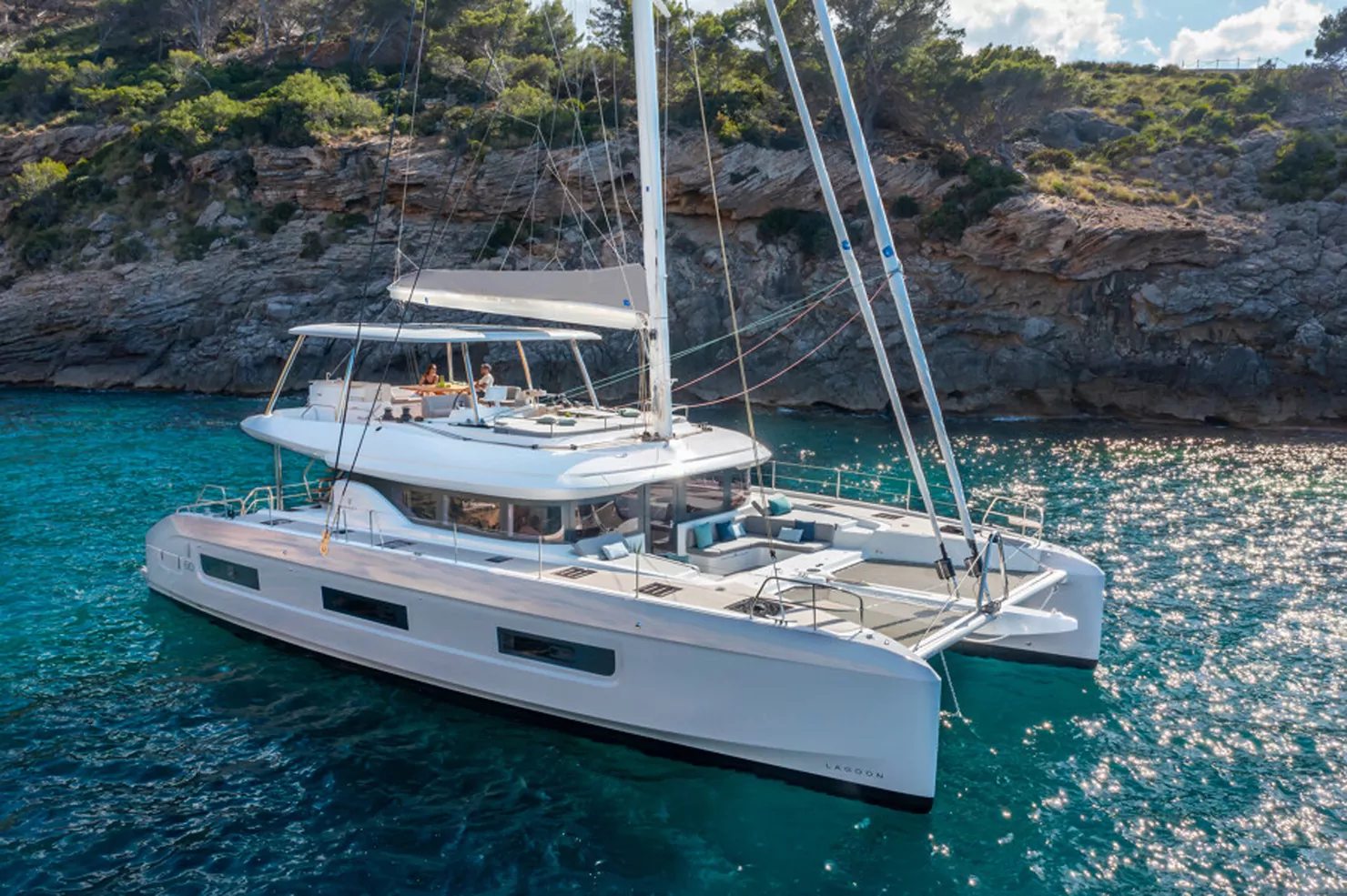
Lagoon 60 catamaran. Source: superyachts.pl
Catamaran charter – when is it worth choosing this type of vessel?
Wondering when a double-hulled yacht will be an objectively better choice than a classic yacht? The decision to charter such a large vessel should be dictated by the composition of your crew and the specific water area. It's an absolutely unrivaled solution for a vacation with friends or a large family. The wide, stable platform and isolated cabins ensure that even with 8-10 people on board, no one gets in each other's way. On the other hand, it's important to pay close attention to the infrastructure of the chosen water area. Catamarans still take up much more space in the harbor than the average boat, so not all marinas are adequately equipped to accommodate them or simply have a limited number of berths. This means booking well in advance and planning a very specific cruise plan well in advance.
If you're planning a vacation in the Caribbean, the Bahamas, or the Seychelles, a double-hulled yacht is practically standard. This is due to its shallow draft (often less than 1.2 meters). Where a classic monohull yacht might keel into a reef, a wide catamaran will sail safely, allowing you to anchor just a few meters from a sandy beach.
If you're looking for an unforgettable vacation, a professional catamaran charter will allow you to choose a vessel perfectly tailored to your needs. For those seeking other types of vessels, the flexible and secure yacht charter on Travelboat makes it easy to book a fleet anywhere in the world, guaranteeing the highest standard of service and transparent terms.
Electric catamaran and solar catamaran – modern solutions on the water
The modern nautical industry places a huge emphasis on ecology and reducing carbon footprints. Innovative, eco-friendly multihull designs are a perfect fit for this trend, redefining propulsion on the water.
- Electric catamaran: a vessel in which traditional, noisy diesel engines have been replaced with modern electric motors. These motors draw energy from powerful lithium-ion battery banks. Their advantages include complete silence, a lack of vibration, and zero exhaust emissions.
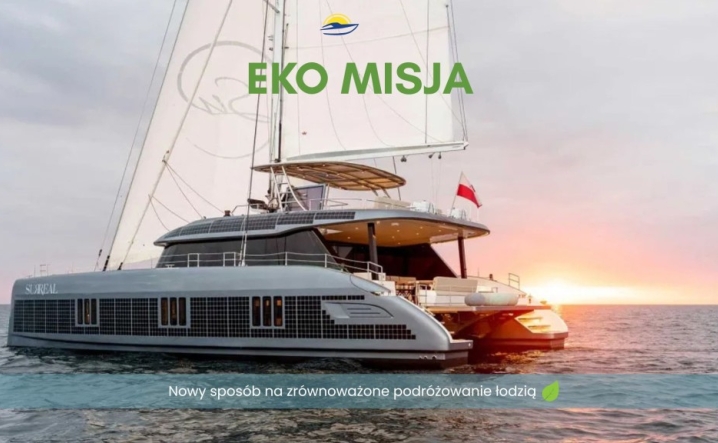
- Solar catamaran: a step further in ecological evolution. The roof of the gigantic saloon and flybridge is entirely covered with high-efficiency, flexible photovoltaic panels. Under favorable conditions, such a solar catamaran can generate enough energy from sunlight to power not only the onboard systems (air conditioning, watermaker) but also the cruising engines. This allows for virtually unlimited, free, and completely clean ocean sailing.
It's worth emphasizing that the absolute global pioneer and leader in this prestigious segment is the Polish shipyard Sunreef Yachts, located in Gdańsk. This Polish shipyard produces the most technologically advanced vessels in the world, combining gigantic solar panels built directly into the composite sides and hull structure. By choosing this unique catamaran , you gain luxury combined with environmental friendliness. Wealthy clients and global sports stars choose catamarans manufactured in Gdańsk, appreciating the innovative "Eco" system, which redefines the concept of zero-emission ocean sailing.
Click and check out the Eco catamaran charter offer
It's also worth noting that the Polish shipyard, Sunreef Yachts, is building the world's largest luxury catamaran ! This project is a record-breaking size in the catamaran world, but also evidence of the growing importance of the Polish yachting industry in the global marketplace.
You can read more about the project HERE
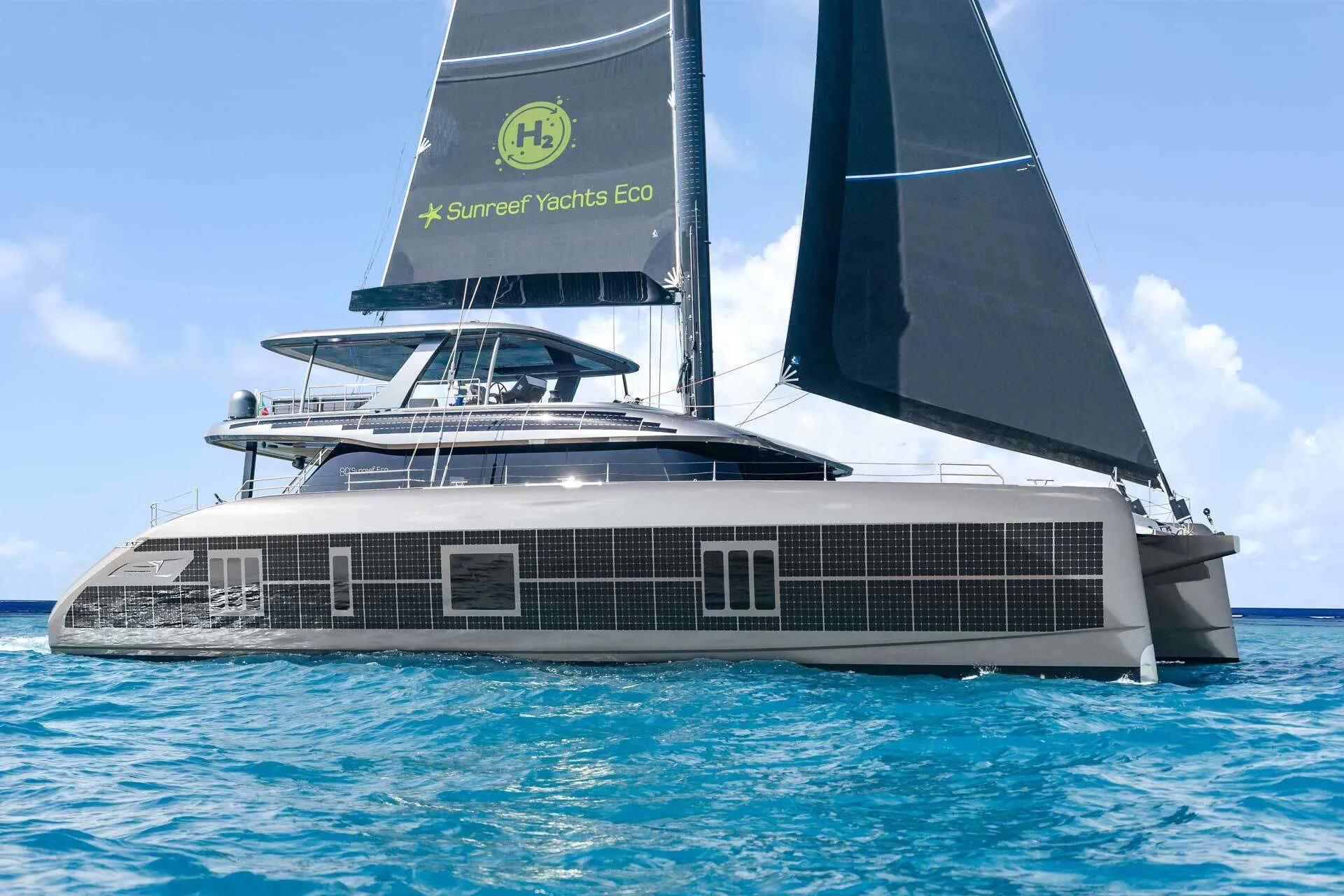
Sunreef's 80-foot sailing catamaran combines hydrogen and electric propulsion. Source: sunreef-yachts.com
Small, fishing and family catamaran – how to adapt the unit to your needs?
The wide range of products available on the market allows you to precisely select the construction parameters to suit your individual idea of spending time by the water.
For those who enjoy active weekend getaways, a small , sporty-recreational catamaran is the perfect choice. It can be easily transported on a car trailer and launched directly from the beach, allowing for extreme speeds on a local lake.
There are also specialized fishing catamarans on the market . These are characterized by smaller dimensions (often aluminum or inflatable), excellent lateral stability (allowing for safe standing spinning without the risk of capsizing), and a low draft, allowing them to navigate shallow reed beds inaccessible to other boats.
On the other hand, for long holidays, a classic family multihull remains unrivaled – safe, spacious, equipped with high protective rails that will prevent children from falling out while carefree playing in the cockpit.
What determines the price of a catamaran?
Moving on to the financial aspects, it's worth understanding the cost structure associated with these luxury vessels. Whether purchasing a private yacht or renting it on a short-term basis, the price of a catamaran is highly variable and depends on several key factors.
Main factors determining costs:
- Square footage and shipyard: The length of a vessel (given in feet) drastically affects the cost. Each additional foot translates into a proportional increase in cubic capacity. Renowned premium shipyards (e.g., Lagoon, Fountaine Pajot, Sunreef Yachts) price their projects higher due to the quality of the materials used.
- Year of manufacture and equipment: new units straight from the showroom are the most expensive. Additional systems such as air conditioning, a generator, a water softener, luxurious interior finishes in exotic wood, and modern eco-friendly drives increase the cost by several dozen percent.
- Season and destination (in the case of charter): rental during the peak holiday season (July-August in the Mediterranean) can be twice as expensive as in May or October.
Because a double-hulled yacht offers twice the space of a classic yacht of the same length, its purchase and charter costs are noticeably higher. However, it's worth remembering that the rental cost is usually spread across a large crew of several people, making the final price per person entirely acceptable for the luxury offered.
FAQ: everything you need to know about winds in sailing
Why are catamarans so popular among sailors?
The main reason is their unparalleled spaciousness and stability. Catamarans don't sail heeled, have huge saloons with panoramic views at the same level as the aft cockpit, and separate cabins in the hulls provide the crew with privacy unmatched by any classic yacht.
Does rocking feel the same on a catamaran as on a yacht?
No, the motion of a catamaran on the water is completely different. Instead of the long, smooth roll and sway of a monohull, a wide catamaran rises and falls stiffly with the waves, maintaining a level deck at all times. This type of motion is much better tolerated by the labyrinth.
What weather conditions are best for a catamaran cruise?
For cruising versions, stable, moderate winds of force 3 to 5 on the Beaufort scale, on full course (downwind or running), are ideal. The wide design makes excellent use of gusts from the sides and stern, achieving impressive speeds while maintaining complete comfort on board.
Is a catamaran suitable for a holiday with children?
This is the best possible choice for a family vacation. The lack of a deep list prevents accidents, the flat and wide deck facilitates safe movement of children, and the bow nets and easy access to the water from the stern platforms provide a fantastic, safe playground for children.
How many people can travel comfortably on board a catamaran?
Standard 40-45-foot cruisers typically feature four to six double cabins, providing comfortable accommodation for eight to 12 people. Additionally, the hulls often include small, separate cabins for the professional skipper and hostess.
Is a catamaran suitable for sailing on lakes and the sea?
Yes. Large cruising versions (over 38 feet) are excellent seagoing and ocean-going vessels. While versions such as small , recreational, and specialized fishing catamarans are perfect for inland waters, lakes, and sheltered reservoirs.
What determines the price of a catamaran when purchasing or chartering?
The cost depends on the length of the boat, the reputation of the shipyard, the year of production, the standard of finish, and the installed systems (e.g., electric catamaran propulsion ). In the case of charter, the departure date (high season vs. low season) and the popularity of the chosen region also play a key role.
When is it better to choose a catamaran yacht instead of a classic monohull?
Choose a double-hulled yacht if you prioritize maximum comfort, space, and privacy for a large group of friends, and want to avoid annoying lists and seasickness. A classic monohull is better suited for those seeking sporty thrills, deep wave-cutting, and those planning a more budget-friendly cruise with a smaller group.
Plan your luxury vacation on the water!
You already know what a catamaran is and the incredible possibilities its twin-hull design offers. It's not just another boat—it's a lifestyle that allows you to combine your passion for exploring the world with uncompromising comfort and luxury.
It's time to translate theory into unforgettable memories. Whether you're planning a family vacation in Croatian waters or an exotic Caribbean expedition, choosing the right vessel is key to success. Visit Travelboat and book your luxury catamaran charter now. Discover the ultimate in maritime adventure and let us take care of every detail of your perfect cruise!